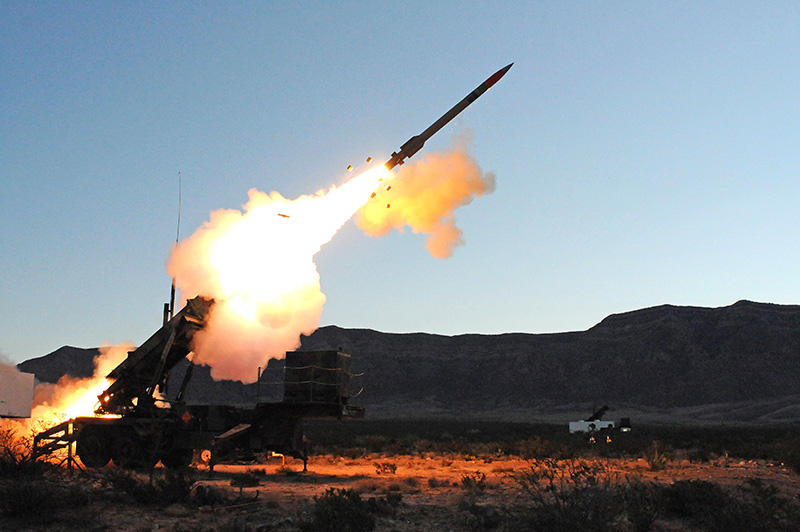
A Patriot Missile is test fired by the U.S. Army in 2019. Patriot Missiles have been used extensively by the U.S. and Gulf allies recently to shoot down Iranian Shahed one-way-attack drones during hostilities in the Middle East.
By Stephen Borgna
Marketing Communications Specialist
The dynamic between regional strike capabilities and the traditional air defenses positioned to thwart them has shifted dramatically with the maturation of drone technologies. This dynamic underscores the urgent need for counter-UAS (C-UAS) anti-drone systems that can be utilized at a lower cost, and with greater efficiency, against drones than traditional air defenses can so that warfighters can fully counteract the scale of large drone swarms. Without dedicated C-UAS systems, a combatant leveraging large swarms of low-cost offensive drones poses a serious threat as some could break through traditional air defense networks on volume alone while forcing defenders to draw down valuable stocks.
Offensive drone technologies such as FPV drones and loitering munitions/one-way-attack drones (i.e. suicide drones or kamikaze drones) have demonstrated a profound effect at striking short- and-medium range targets in conflicts around the world over the past five years. Sometimes dubbed “the poor man’s cruise missile” and often launched in swarms, combatants utilizing these assets can manufacture, stage, and deploy them at a fraction of the cost relative to typical defense expenditures.
On the other hand, traditional air defenses that have typically been tasked to stop them, while effective, are orders of magnitude more expensive. There are also fewer of them, and they take much longer to produce and deploy. This discrepancy came to a head following Russia’s invasion of Ukraine and, most recently, in the Middle East during operations against Iran as part of Operation Epic Fury.
The New Necessity for Counter-UAS Systems
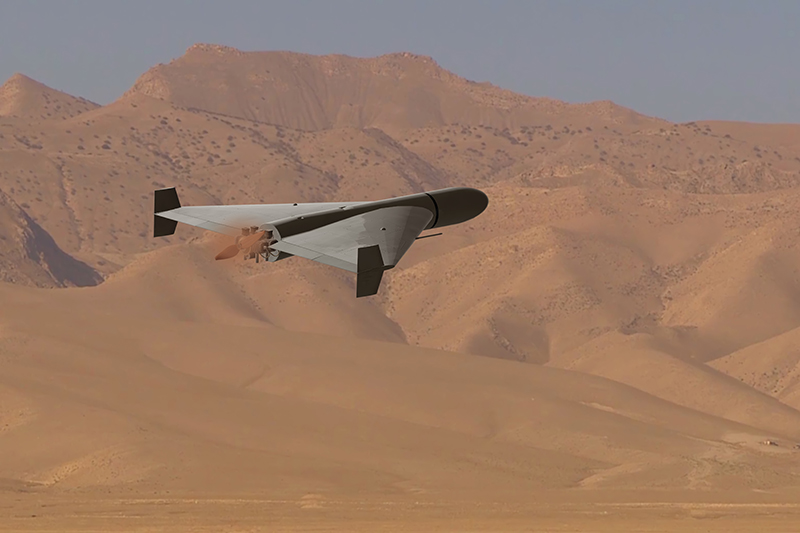
A rendering of an Iranian Shahed loitering drone.
Iran possesses a family of domestic unmanned combat aerial vehicle (UCAV) and loitering munition drone platforms called the Shahed. In particular, the Shahed-136 autonomous pusher-prop loitering variant can be manufactured quickly in large numbers at approximately $50,000 a unit (Russia has manufactured a version of the Shahed under license since 2023, under the designation Geran-2. It has fired them in large numbers at Ukraine). Upon the outbreak of hostilities in late February, Iran has consistently launched Shahed drones en masse at U.S. regional assets and neighboring states in the Gulf. The U.S. and its Gulf allies have largely countered the Shahed so far with a variety of traditional air defenses, particularly U.S.-made surface-to-air missile (SAM) systems, with great effect.
While these systems are effective, a single U.S. Patriot PAC-3 MSE variant missile for example costs between $4 million-$5 million to produce with much longer production timetables than the drones they’re defending against. Recent reports have stated that more than 800 Patriot missiles were fired in air defense over a mere three-day period in early March during Operation Epic Fury. Another recent estimate stated that for every dollar Iran spends on producing a Shahed, the United Arab Emirates has spent up to $28 to shoot it down (the UAE is one of six Gulf states Iran has targeted with drones and ballistic missiles along with Saudi Arabia, Qatar, Bahrain, Kuwait, and Oman).
Iran has fired thousands of Shahed drones in the conflict so far and most have been intercepted, an attestation to the traditional air defense capabilities operating in the theater that were designed to take down far more advanced targets anyway. Though as time goes on, stocks of advanced air defense materiel will inevitably be further exhausted to keep up the pace, consequently straining the supply chain.
Deploying high-cost interceptors or dedicating advanced platforms such as fighters is undeniably effective at neutralizing the slow and simple Shahed with its highly recognizable silhouette and lack of features to minimize its radar signature, but it is not a sustainable long-term strategy. As a result, there is a growing emphasis on developing and fielding new and existing counter-UAS architectures that can provide scalable, repeatable drone defense without the disproportionate cost per engagement.
Addressing the Anti-Drone Cost Curve

A Polish soldier prepares a Merops anti-drone system out of the bed of a pickup truck in late 2025.
While traditional SAM systems remain essential for countering ballistic missiles, cruise missiles, and aircraft, recent events have made clear the need to reserve high-end interceptors for the targets they were designed to defeat.
While dedicated C-UAS systems have been undergoing development for years, lessons from Ukraine and recent developments in the Middle East have spurred the United States and its allies to place more emphasis on developing and fielding layered C-UAS architectures capable of addressing large volumes of low-cost drones. These include expanded electronic warfare capabilities, mobile short-range air defense (SHORAD) platforms, and growing investment in directed energy weapon (DEW) technologies such as high-energy lasers (HELs) and high-power microwave (HPM) systems.
One system that is expected to see immediate use is the U.S. Merops system. The Merops is a small anti-drone platform small enough to fit and operate in the bed of a pickup truck that launches a counter-drone as its projectile against drone threats. The interceptor drone is a propeller-driven platform known as the Surveyor, which is capable of being controlled via a human operator or autonomously homing in on a target through artificial intelligence as well as a variety of RF and radar sensors.
Having proven itself in the hands of Ukraine by downing nearly 1,900 Russian drones since the start of the war, the U.S. now plans to begin fielding the Merops in the Middle East. Compared to the cost of U.S. SAMs, the Merops Surveyor Interceptor costs about a mere $15,000 apiece.
Closing the Cost Gap with Low-Cost Strike Systems
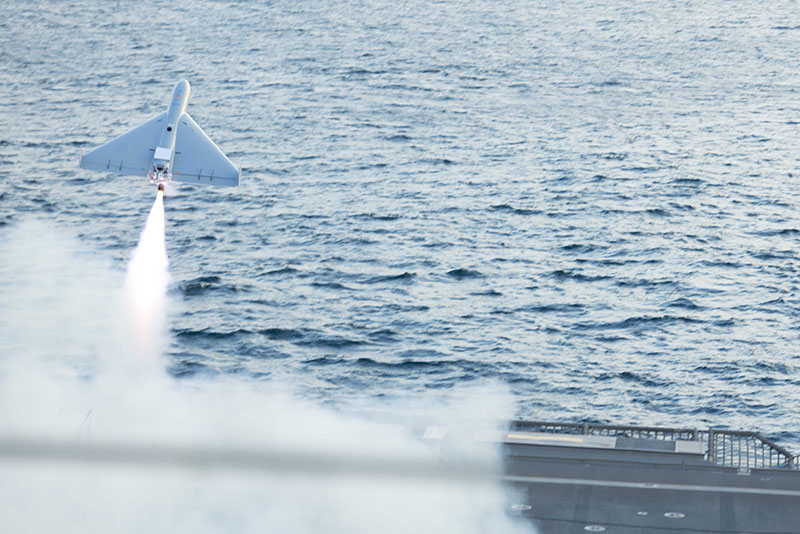
A Low-cost Unmanned Combat Attack System (LUCAS) drone launches from the deck of the Independence-class littoral combat ship USS Santa Barbara in late 2025.
The U.S. defense sector’s increasingly growing interest in low-cost drone technology isn’t limited to just defense. The U.S. has also successfully developed and fielded a low-cost offensive drone of its own.
In a rarity for the U.S. military industrial base, engineers reverse-engineered a captured Shahed-136 drone to create a new low-cost one-way-attack drone for the U.S. military dubbed the Low-Cost Uncrewed (Unmanned) Combat Attack System, or LUCAS.
Inspired by the Shahed, the LUCAS improves on it in several ways, including weighing lighter than the Shahed at 81.5 kg and featuring more-advanced guidance and control systems as well as onboard AI capabilities.
The U.S. began using LUCAS drones in combat upon the outbreak of the war against Iran. LUCAS costs approximately $35,000 a unit.
Designing for Future Drone Threats
.jpg)
As counter-UAS applications expand, the most important trend is the rapid increase in architectural complexity required to keep pace with the evolution of the drone threat. Low-cost swarms, frequency agility, reduced RF signatures, and autonomous behaviors are compressing timelines for detection, classification, and engagement while simultaneously increasing the amount of data that must be moved, processed, and acted on in real time.
In many cases, the difference between an effective system and a compromised one is measured less by the headline capability of a radar or jammer and more by the speed and reliability of the system’s internal decision loop.
That shift puts new pressure on the fundamentals. As platforms fuse radar, RF, EO/IR, and command-and-control into layered architectures, they must move high-bandwidth data with predictable latency while operating inside dense electromagnetic environments of their own making. Signal integrity and EMI control directly influence whether sensor inputs remain usable, whether processing stays stable under load, and whether defeat mechanisms can be applied without self-interference. At the same time, rising power density, particularly in high-output EW transmit chains and directed energy systems, forces designers to treat power distribution, grounding, and thermal headroom as primary performance drivers rather than packaging details.
In other words, anti-drone effectiveness will depend as much on system architecture and signal integrity as on the sensors and underlying system architectures and mechanisms themselves. Systems that are modular, upgradable, and engineered for high-speed data movement and EMI resilience are better positioned to adapt as threats evolve. This is where the underlying interconnect configuration becomes important. The interconnect decisions that support bandwidth, shielding integrity, and power handling increasingly determine how far counter-UAS capabilities can scale, how reliably they can perform, and how quickly they can be updated in response to the next shift in the threat.
The importance of effective and cost-efficient counter-UAS systems is becoming more apparent by the day as the effectiveness of cheap drone technologies is repeatedly demonstrated in conflicts around the world. Couple that with the financial and supply chain burden that would inevitably result from relying solely on high-priced advanced air defense systems to counter low-cost drones, and the need for dedicated C-UAS platforms is more evident than ever.
Addressing Interconnect Challenges in Counter-UAS Platforms
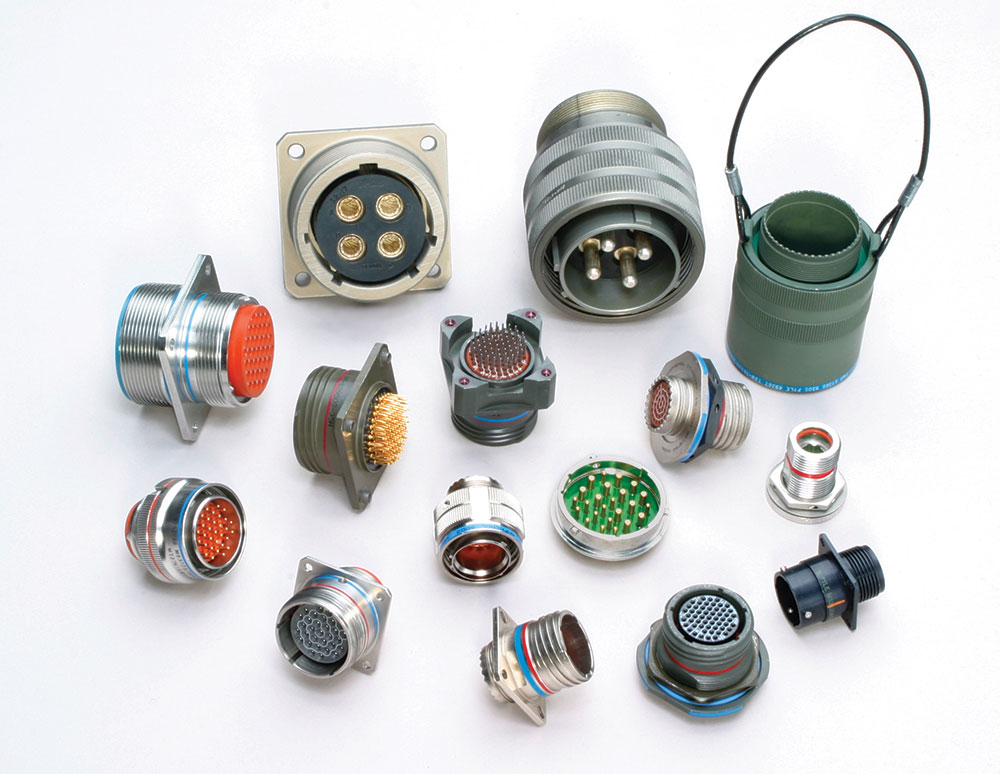
As C-UAS systems expand to address cost discrepancies and sustained drone volume, the supporting architecture becomes just as critical as the sensors and defeat mechanisms themselves. Layered anti-drone suites must move high-speed data reliably, distribute increasing power loads, and maintain shielding integrity inside dense electromagnetic environments. When systems are operating continuously against large swarms, signal integrity, grounding discipline, and connector reliability directly influence system performance and operational endurance.
Amphenol Aerospace supports next-generation C-UAS architecture with an extensive portfolio of interconnect solutions engineered for harsh environments. Among our capabilities, our VITA interconnect systems enable modular mission computing and sensor fusion platforms capable of processing high-bandwidth data in real time. Our high-speed copper contact solutions such as Octonet and Quadrax support controlled-impedance data transmission across RF-dense enclosures. Amphenol CF38999 Multi-Channel Fiber Optic Connectors and MT38999 Multi-Channel Connectors with MT Ferrules provide EMI-immune data links for distributed sensors and command networks. For high-output electronic warfare and directed energy platforms, Amphenol high-power and high-voltage interconnect solutions support rising power demands while maintaining shielding effectiveness and mechanical durability.
As counter-drone systems continue to scale, sustainability will depend not only on lower cost-per-intercept, but on architecture built to handle volume without degradation. The performance of the interconnect layer increasingly determines how reliably these systems can operate, how quickly they can be upgraded, and how effectively they can adapt to the next shift in the drone threat. As well as enabling these platforms to run sustainably at the lower-cost output they were designed for.
WaSP Microminiature Connectors
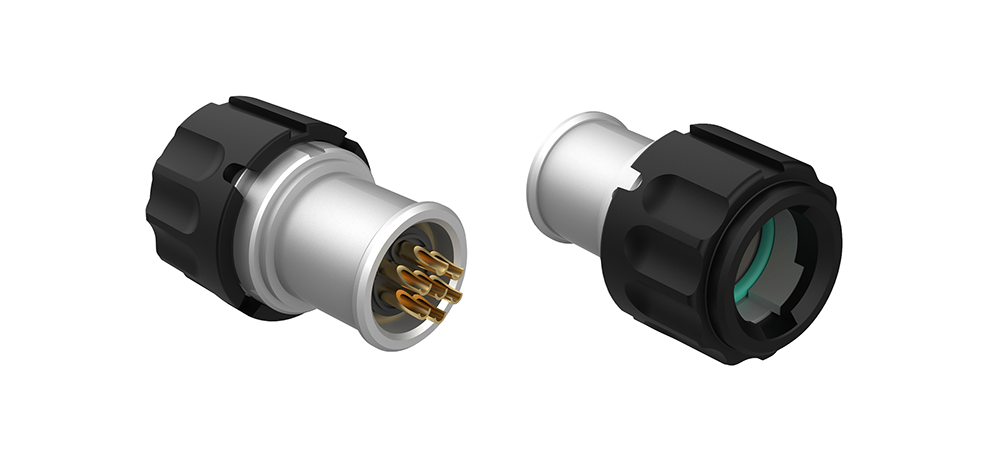
Amphenol Aerospace’s new WaSP connector series is the ideal high-volume, SWaP-C-optimized microminiature solution for UAS and counter-UAS systems and is the latest entry to our microminiature solutions catalog. Extremely light and low-profile, with an aluminum shell plug and receptacle weighing just over nine grams mated, WaSP delivers 400V AC working voltage and supports 25 AWG contacts rated to carry up to 5 amps of DC current, depending on ambient temperature.
WaSP features strong environmental performance with IP67 sealing and is rated for 48 hours of salt spray with a passivation layer and an operating temperature range of -55°C (-67°F) to 85°C (185°F). Mating the WaSP is quick and simple with a ¼ turn polymer locking ring and no jam nut.
UAS and C-UAS technologies are rapidly trending toward system architectures that can be produced cheaply and quickly, but interconnect performance must remain reliable while delivering the rugged resilience expected of harsh environment systems. WaSP has been engineered to fill this niche.